Saturday, 2 December 2017

SoftBank Said to Offer to Buy Uber Stock at 30 Percent Discount

SoftBank Said to Offer to Buy Uber Stock at 30 Percent Discount

SoftBank Said to Offer to Buy Uber Stock at 30 Percent Discount

Japan's SoftBank Group Corp is offering to purchase shares of Uber Technologies at a valuation of $48 billion, a 30 percent discount to its most recent valuation of $68.5 billion, a person familiar with the matter said on Monday.
The investment, which has been approved by the Uber board, would give the Japanese investor up to 17 percent of the ride services company. The offer comes as Uber is trying to improve corporate governance and cut the influence of former Chief Executive Travis Kalanick.
A second person said the offer price was in line with what investors had been expecting. SoftBank is also expected to make a separate $1 billion investment in the company at the $68.5 billion valuation.
SoftBank is making the tender offer on Monday, the sources said. Even at the discounted price, Uber is one of the world's most valuable companies, and the offer is a chance for early investors to lock in substantial profits.
Bloomberg reported the offer price earlier on Monday.

Facebook to Expand Artificial Intelligence to Help Prevent Suicide

Facebook to Expand Artificial Intelligence to Help Prevent Suicide

PlayerUnknown's Battlegrounds Coming to Mobile Devices in China: Tencent

PlayerUnknown's Battlegrounds Coming to Mobile Devices in China: Tencent


PlayerUnknown's Battlegrounds Coming to Mobile Devices in China: Tencent

PlayerUnknown’s Battlegrounds (PUBG) will be coming to mobile devices. Tencent — PUBG’s China publisher will be working with the game’s developer Bluehole to bring PUBG to mobile devices for the Mainland China market.
According to a post by Tencent, development on the mobile version of PUBG is “ongoing smoothly”. What this means is, you can expect PUBG on Android and iOS devices soon enough.
There’s no mention of a PUBG mobile game release outside of China just yet. No surprise considering 40 percent of the PC version's player base resides in China. The Xbox One gets PUBG globally as well on December 12.
Given that Tencent’s rival NetEase has games akin to PUBG such as Terminator 2 and Wilderness as the first and third most downloaded mobile games in China at the moment, it’s only natural that the company is looking to compete in whichever way possible.
Earlier in the year, Tencent was bashed by China’s media for getting children hooked on violence after the fantasy role-playing game Honour of Kings boomed in popularity, forcing it to introduce a curfew for underage players.
The company said it would highlight the spirit of teamwork and fair competition from PUBG and ensure it delivers "healthy, positive cultural and value guidance, especially for underage users".

Canon EOS M100 Mirrorless Camera With 24.2-Megapixel Sensor Launched in India: Price, Specifications

Canon EOS M100 Mirrorless Camera With 24.2-Megapixel Sensor Launched in India: Price, Specifications

HIGHLIGHTS

  • Canon EOS M100 is priced at Rs. 39,995
  • New mirrorless camera is powered by Canon's DIGIC 7 processor
  • Canon has also launched its TS-E series lenses in India
Canon on Monday launched expanded its M series mirrorless camera models and brought the EOS M100 to the Indian market with a price tag of Rs. 39,995. The interchangeable-lens camera was originally announcedback in August with a 24.2-megapixel image sensor. Additionally, the company has launched its new range of lenses that includes the TS-E50mm f/2.8L Macro, TS-E90mm f/2.8L Macro, and TS-E135mm f/4L macro and EF85mm f/1.4L IS USM, and Macro Twin Lite MT-26EX-RT.
The Canon EOS M100 features a 24.2-megapixel APS-C CMOS sensor and a DIGIC 7 processor. The proprietary image processor enables the camera to shoot still images with 4fps burst mode and up to 6.1fps using fixed focus. There is Dual-Pixel CMOS autofocus to let users capture moving subjects with precision. The camera also has a 3-inch touch panel LCD screen and includes a Creative Assist feature that brings easy editing and connectivity options. There are six Creative Assist settings that have all frequently used options.
Canon has provided an ISO range of 100-25600 on the EOS M100. Also, the camera has features such as in-camera RAW conversion, self-portrait mode, and a list of creative features. There is Bluetooth, Wi-Fi, and NFC on the connectivity front. Besides, the camera has 60p full-HD video recording support and weighs 302 grams (body only).
"A perfect companion for any photo enthusiast, the compact and easy-to-use EOS M100 takes brilliant images and records stunning videos. With its 3.0-inch tilt-type LCD that rotates 180 degrees, the camera takes selfies to a whole new level. We are delighted to bring the new generation of photography solutions here in India and shape the future of imaging in the country," said Eddie Udagawa, vice president of consumer imaging and information centre, Canon India, in a press statement.
You can pair the Canon EOS M100 with one of the latest TS-E series lenses. The TS-E50mm f/2.8L Macro, the TS-E90mm f/2.8L Macro, and the TS-E135mm f/4L Macro all are priced at Rs. 1,72,995, while the EF85mm f/1.4L USM comes with a price tag of Rs. 1,17,995 and the Macro Twin Lite MT-26EX-RT is priced at Rs. 64,999.

Xiaomi Ousts Samsung, Leads Smartphone Sales in Top 50 Indian Cities: IDC

Xiaomi Ousts Samsung, Leads Smartphone Sales in Top 50 Indian Cities: IDC


Xiaomi Ousts Samsung, Leads Smartphone Sales in Top 50 Indian Cities: IDC

HIGHLIGHTS

  • IDC claims Tier I cities in India are "key volume driver"
  • Major 50 cities account for 50 percent of smartphone sales in India
  • Bhopal, Gurugram, and Jaipur emerge as "fastest growing cities"
As per a report by International Data Corporation (IDC), Xiaomi held the maximum market share in the top 50 Indian cities in the Q3 2017 period, followed by SamsungLenovo (including Moto), Oppo, and Vivo. The top 50 Indian cities have accounted for 50 percent of overall smartphone sales in the country in the third quarter this year. Among all the major cities, Tier I cities in the country are considered to be the "key volume driver" for the Indian smartphone market with a sequential quarterly growth of 29 percent in the last quarter. IDC also reveals that Bhopal, Gurugram, and Jaipur from the Tier II cities have emerged as the "fastest growing cities" with each reporting a massive growth of more than 40 percent from the previous quarter.
IDC in its India Monthly City-Level Smartphone Tracker claims that in the top 50 cities, Xiaomi ousted Samsung to take 26.5 percent of the market. It is said to have registered 120 percent growth in the period, while the Redmi Note 4 contributed to 40 percent of its volumes - becoming the highest selling smartphones across the cities. Offline expansion through the company's Preferred Partner programme and Mi Stores added to this growth, IDC said.
Samsung, which moved to the second slot with 24.1 percent market share, saw 15 percent quarterly growth. IDC says the brand continues to dominate in several cities thanks to its "deep penetration and reach." The Samsung Galaxy J2Galaxy J7 Max, and Galaxy J7 Nxt made up 50 percent of volumes of the South Korean manufacturer, IDC said.
Lenovo (including the Moto brand) had the third spot with a 10.3 percent share, and grew 8 percent from the previous quarter. New Delhi, Mumbai, and Bengaluru were the top cities for the company, with the Lenovo K6 PowerMoto E4 Plus, and Lenovo K6 Note the top sellers.
Oppo moved up to the fourth position with a 5.2 percent share, with the Oppo F3F3 Plus, and A71smartphones major contributors to the growth the company enjoyed. Finally, Vivo slipped to the fifth spot at 5.1 percent, and is said to have seen a marginal decline in sales from the last quarter. IDC cites "reduced channel spends" as the primary reason for the fall, but is optimistic about the success of the Vivo V7+ and Vivo Y69 smartphones to bring it back to the fourth position.
IDC says that metro cities continued to be the major contributors to growing smartphone sales in India. Alone Delhi and Mumbai contributed one-fourth of the total sales in top 50 cities. However, expansion of data supply and 4G penetration across the country enabled Tier I and Tier II cities to attract all the smartphone vendors. "Almost all vendors have now decided to go aggressive on offline channel expansion. It will be interesting to see how they are able to match the distribution strength and retail spends by offline dominant players like Samsung, Oppo, and Vivo. Considering the huge hitherto tapped demand from smaller cities and towns, eventually, these vendors will be forced to tweak their strategies to reach out to the customers in these markets," said Navkendar Singh, associate research director, IDC India, in a press statement.
Vendors are reportedly diversifying their sales and marketing strategies, while e-tailers like Amazon and Flipkart are expanding their presence in India to cater the growing demand for smartphones. Furthermore, IDC claims that e-commerce companies are contributing to around 40 percent of the market in top 50 cities in the country.
"Mega-online sale(s) by prominent e-trailers acted as the catalyst for the robust growth across city tiers with e-tailers now contributing around 40 percent of the market in top 50 cities of India. However, the offline channel saw only average traction during the festive season," said Himanshu Jain, market analyst, IDC India.
A previous IDC report revealed that smartphone shipments in India reached a record 39 million units in last quarter, up 40 percent from the previous quarter and 21 percent from the same period last year. Xiaomi surfaced as the top smartphone brand in the country, jointly sharing the leadership with Samsung, with a market share of 23.5 percent in the third quarter.

Amazon India Unveils Startup Challenge on Launchpad Anniversary

Amazon India Unveils Startup Challenge on Launchpad Anniversary

Amazon India Unveils Startup Challenge on Launchpad Anniversary

Amazon India on Monday collaborated with hardware accelerator HAX and crowd-funding community Kickstarter to announce Startup C-Cube - a multi-level challenge for the startups that will commence in Bengaluru on December 5.
"We are happy to bring Kickstarter and HAX to give Indian startups an opportunity to get their ideas noticed at the global stage and arm them with resources to convert these into real business opportunities," said Manish Tiwary, Vice President, Category Management, Amazon India, in a statement.
The move is expected to bring companies together to work towards building the product startup ecosystem.
The announcement marks the first anniversary of Amazon's flagship programme Launchpad.
"In the past one year, we have been overwhelmed by the response that Amazon 'Launchpad' has received from the start-up ecosystem in India. Business growth of some of the startups on Amazon 'Launchpad' has elicited interest from VCs as well as other funding agencies in the last one year," Tiwary added.

Online Retail Is Threatened by Offline, Not the Other Way Around: Biyani

Online Retail Is Threatened by Offline, Not the Other Way Around: Biyani

Online Retail Is Threatened by Offline, Not the Other Way Around: Biyani

Future Group CEO Kishore Biyani Monday said the burgeoning online retail sector in India has a threat from physical retail models like Big Bazaar and Easyday, owing to low business share and high cost of business of the former.
Biyani said although the next trend is digitisation, but physical and digital are not different as layering of technology over physical is the need of the hour.
"Online retail has a threat from us and it's time people realised that they are not a threat to us, as they don't even have 1 percent business share and the cost of doing business is also too high," Biyani told PTI.
Over the years, part of the retail consumers have moved to online platform such as Flipkart and Amazon for purchase of the daily use items.
"If you look world over, Alibaba is only buying physical retail, so is Amazon and therefore times have changed," Biyani said adding that the fever of online shopping of consumer items by Indians have gone away.
The leading retail chain is on an aggressive expansion mode witnessing huge demand and had recently announced opening 10,000 member-only Easyday stores to make it a Rs. 1.5-trillion business opportunity by 2022.
The group unveiled a 30-year vision, Retail 3.0, by when it plans to become Asia's largest integrated consumer retailer by 2047 with revenue of in excess of $1 trillion (roughly Rs. 64,50,337 crores).
Biyani said the fashion and food categories are seeing continuous demand with the fashion segment growing rapidly and chains such as FBB, Central and Brand Factory are in good shape.
When asked about his views on online retail taking over physical retail, Biyani said both are converging and ten years from now everything will converge completely and the company has always been at the forefront, not missing any trend.
"China which people think is the most digital driven country has 82 percent physical, America has 89 per cent physical model and similarly India too has huge potential for physical retail as online share is very less," Biyani said.
"We are called Future group because we look at the future and plan much before," he added.
As per a joint report by Ficci and Deloitte, increasing use of smartphones, apps, web and social media will lead to growth of omni-channel retail by amalgamation of offline and online services with Indian retail industry which is growing at 10 percent, may almost double to Rs. 85 trillion (lakh crores) by 2021.
Another report by Ficci and PwC last year said the consumer spending will rise backed by robust economic growth and rising household incomes.

Microsoft Office Apps Now Accessible by All Chromebooks With Google Play: Reports

Microsoft Office Apps Now Accessible by All Chromebooks With Google Play: Reports


Microsoft Office Apps Now Accessible by All Chromebooks With Google Play: Reports
A long time after supporting Android apps, Chromebooks have now received Microsoft Office. The new experience comes with the latest Microsoft Office apps for Android that are available through Google Play store - specifically, Word, Excel, OneNote, PowerPoint. Originally, Chromebook users utilised Google Docs, Google Sheets, and Google Slides as their default productivity apps. Only late last year did select models including the Pixelbook and Asus Chromebook Flip gain access to Microsoft Office Android apps, despite several other models having Google Play store access.
Google and Microsoft haven't announced the latest development. However, as folks at ChromeUnboxed spotted, the Microsoft Office suite of Android apps now appears to be available for all Chromebooks with Google Play integration. Some Reddit users have also confirmed the new advancement. "I just checked Google Play Apps and found the Microsoft Office Suite for Android including One Note, Word, PowerPoint, Excel are now again available on Chromebooks," a Redditor wrote in a recent post.
With the fresh update, you can use Microsoft Office on your Chromebook. The Office package is certainly not as advanced as the one available for a Windows 10 or Mac PC. Also, users will need an Office 365 account if they intend to edit documents, or a screen that's 10.1-inches in size or smaller.
This isn't the first time when Chromebooks have received a treatment that takes them against Windows-based notebooks. In May last year, Google announced Android app support for Chrome OS and confirmed the arrival of Google Play to download new apps on Chromebooks. Microsoft also updated its Skype client last year to enable voice calls on Internet-powered Chromebooks. Moreover, in August, Google launched Chrome Enterprise to persuade enterprises to switch to its Chrome OS and start using Chromebooks instead of any traditional notebooks. The Sundar Pichai-led company tied up with VMware and Microsoft to enable new enterprise-centric management tools.
Alongside targeting enterprises, Google is largely focusing on promoting Chromebooks in the education sector. Chromebook shipments overtook Apple's MacBook lineup in the US last year. Further, consulting firm Futuresource in a recent report claim that 58 percent of US K-12 schools are relying on Chromebooks, whereas Windows-based notebooks and desktops come second with around 22 percent.

HIGHLIGHTS

  • Microsoft Office was previously available on select Chromebooks
  • Google Play-enabled Chromebooks said to be compatible
  • Microsoft Office apps available Google Play


Sunday, 3 September 2017

JBL Launches Smart Speakers With Google Assistant, Boombox, AirPods-Like Earbuds, and More at IFA 2017

JBL Launches Smart Speakers With Google Assistant, Boombox, AirPods-Like Earbuds, and More at IFA 2017


JBL Launches Smart Speakers With Google Assistant, Boombox, AirPods-Like Earbuds, and More at IFA 2017

HIGHLIGHTS

  • JBL has launched Google Assistant-powered Link speaker series
  • JBL Boombox, Free wireless earbuds were launched too
  • UA Sport Wireless Train headphone & other JBL products to ship in October
JBL has announced the launch of several products ahead of the IFA 2017 trade show happening in Berlin. The new products that have been launched include Google Assistant-powered JBL Link speakers, a portable JBL Boombox speaker, UA Sports Wireless Train headphones, Apple AirPods-like JBL Free wireless earbuds, JBL Bar studio soundbar speakers, and some more.

Starting off with the JBL Link series, there are three models in total in the series - Link 10, Link 20, and Link 300. All of the three new speakers come integrated with Google Assistant, and are part of Google's announced lineup of third party smart speakers. The Google Assistant can be configured and activated on the Link series speakers by either tapping a button placed on the top or saying "Ok, Google" to perform actions further. The JBL Link series speakers come with built-in support for Chromecast.

The JBL Link 10 and Link 20 speakers are powered by a rechargeable battery that runs for around five hours, however the Link 300 speaker doesn't come with a battery and uses AC power instead. The Link 10 features two 8W speakers, Link 20 has two 10W speakers, while the Link 300 boasts of a 50W speaker. The first two Link 10 and Link 20 are also portable in nature and are IPX7 certification for waterproofing, but Link 300 is designed to keep at home. All of them support Wi-Fi connectivity and can be set up in synchronisation to give a better audio.

As for the pricing and availability, the JBL Link series will start being available in the fall. The JBL Link 10 will cost EUR 169, Link 20 is priced at EUR 199, and the Link 300 bears a EUR 299 price tag with availability in the countries of the United Kingdom, Germany, and France as of now.

JBL also has a Boombox speaker that comes without the support for Google Assistant. The JBL Boombox is a Bluetooth speaker that weighs around 5kg and is 20 inches long. It features four active transducers along with two bass radiators. It can deliver up to 24 hours of playback with its massive 20000mAh battery and is IPX7 waterproof. It has two USB ports that can also double up as smartphone charging points. The JBL Boombox will be available to buy in offline stores from September 19 at a price of EUR 499.

jbl boombox JBL Boombox

Next comes JBL's answer to Apple's AirPods - the JBL Free wireless earbuds. The JBL Free earbuds are meant to be used on the go with a continuous music playback of up to 4 hours, supported by a battery that the company claims can be charged within 15 minutes inside a case, which also retains 20 hours of power backup.

The JBL Free wireless earbuds come with microphone for taking up calls etc. JBL is also offering two additional comfort-fit eartips and two silicon sleeves, along with the earbuds at a price of EUR 149. It will start shipping in October.

jbl free JBL Free

In the wireless wearable audio device category, JBL has one more product up its sleeves. JBL has launched UA Sport Wireless Train headphones in partnership with Under Armour, as the first UA-branded product. The wireless headphones are covered under the Under Armour's proprietary SuperVent fabric, which means you can choose the colour of the headphone of your choice. It packs a 'Speed Charge Battery' that can last up to one hour with just 5 minutes of charging, claims the company. The UA Sport Wireless Train headphones will be made available in December this year at EUR 199.

jbl ua sport wireless train JBL UA sport train

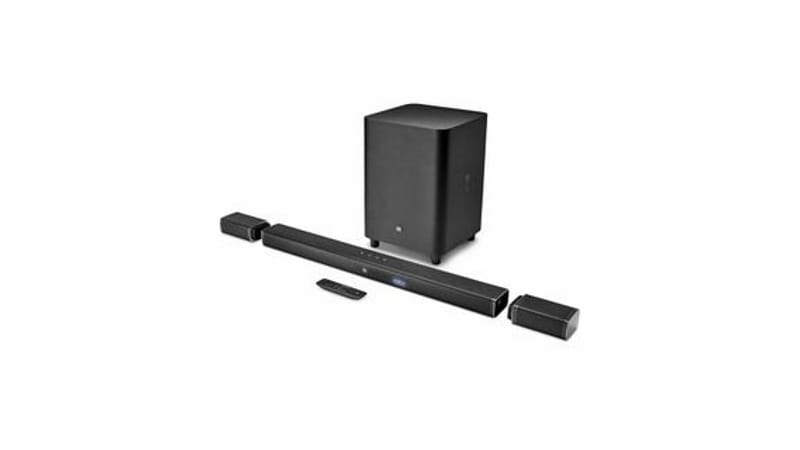
Other products that have been launched by JBL include a new Bar series of four soundbars meant for home theatre experience at home in a price range of EUR 179 to EUR 749. Among them, the JBL Bar 5.1 is the top-of-the-line soundbar that can be used to create a stereo surround sound by detaching rear speakers into two. It also features a 510W of total system power, three 4K HDMI inputs, a 10-inch wireless subwoofer, and DTS decoding. Other three models are Bar STUDIO, Bar 2.1, and Bar 3.1.

jbl bar soundbar JBL Bar

JBL has also launched JBL Reflect Fit, JBL Junior, and JBL E65BTNC - all featuring wireless connectivity at a price of EUR 149, EUR 24.99, and EUR 199 respectively. All of them will also start being available in October.
For the lates

New Update

What Miley Cyrus Wrote in Her Letter to Hannah Montana

  Hannah Montana   premiered on the   Disney Channel   on March 24, 2006, meaning that yesterday was the   15th anniversary of the character...